If you are reading this with a repair quote in your hand, start here: your reaction — that much, on a machine I bought six years ago? — is not naive. It is an accurate reading of what has happened to this category.
The quote is probably fair, too. Your technician did not invent the price of the part. It costs what it costs because of decisions made long before your machine was built, by engineers optimizing for a target that had very little to do with year six.
This post is about those decisions. Not a conspiracy — there isn't one — but a chain of rational, cost-driven engineering choices that add up to a washer that is cheap to buy, expensive to fix, and effectively disposable.
Serviceable assemblies became sealed modules
This is the big one, and it is the change almost nobody explains to shoppers.
An older washer was a collection of parts. A bearing was a bearing, a seal was a seal, a pump had a housing that came apart. When one failed, a technician replaced the failed item, and the labor was the expensive half of the bill.
A modern cost-engineered washer is a collection of modules. Bearings are pressed into a molded plastic housing that is welded or bonded shut at the factory. Pumps arrive as sealed units. Drive components come as a bonded assembly. None of it is designed to be opened, because opening it was never part of the plan — the plan was to build it fast, light, and cheap.
The consequence shows up years later, at your kitchen table. When a sealed module fails, there is no part to replace. There is only the assembly to replace, at assembly prices, plus the labor to get to it. What would once have been a modest repair is now a major one, and the difference has nothing to do with how hard the job is. It is a purchasing decision the manufacturer made for you in advance.
Molded plastic is not villainous, either — it is lighter, quieter, corrosion-proof, and far cheaper at volume, and for a machine designed around a decade of service it is a sound choice. The problem is that it quietly converts your washer from a repairable appliance into a consumable one, and nothing on the showroom tag tells you that happened.
Control boards, and why one failure can total a machine
The second structural change is electronic. A washer that used to run on a mechanical timer and a handful of switches now runs on control boards: a main board, often a separate user-interface board, and a set of sensors reporting to them.
What that buys you is real — precise water metering, load sensing, cycle options, diagnostics. What it costs you is single points of failure. A board is one component whose failure stops the entire machine no matter how healthy the motor, tub, and plumbing are. Boards are also model-specific rather than commodity parts with competing suppliers, which is exactly why an out-of-warranty board quote lands the way it does.
This is where the word totaled comes in. Adjusters use it for cars when the repair exceeds what the car is worth; appliances have the same threshold, and a board replacement on an out-of-warranty machine is the most common way to cross it. The machine is not worn out. It has one dead part with an outsized price, attached to a chassis nobody built to outlive it.
The repair-versus-replace math — run it on your own quote
We are not going to invent numbers for you. The only two that matter are on your own kitchen table: what the repair costs, and what a comparable new machine costs delivered. The framework technicians and owners actually use is simple.
When the repair quote approaches half the replacement cost, most people replace. Lean further toward replacing if the machine is past roughly two-thirds of its expected life, if the failed part is a sealed assembly (its neighboring components are the same age), or if this is the second repair rather than the first. Lean toward repairing if the machine is young, the failure is genuinely isolated, and the rest of it is quiet and dry.
Here is the part that should bother you: that rule is sound advice, and it is also the engine of the whole cycle. A machine designed to a short life fails outside warranty; the sealed-module repair prices out near half a new machine; the owner replaces it with another machine built to the same targets; the clock restarts. Nobody behaves irrationally at any step, and you still buy the same appliance over and over.
Our companion post on how long washing machines last covers the lifespan side in detail, and are Speed Queen washers worth the price works through the ownership economics.
What a longer design life actually buys
A design life is not marketing language. It is a number engineers are handed before the first part is drawn, and everything downstream — material choices, tolerances, how long the durability lab runs the machine — is set to hit it. If the target is short, the machine is short-lived no matter how gently you treat it.
Speed Queen designs and tests its residential washers to a 25-year design life. That single input changes every answer above, because a component that only has to survive a decade can be built in ways a component expected to run twenty-five years cannot.
You can see it in what the machines are made of. Per the Alliance spec sheet, a Speed Queen top load uses a stainless steel wash tub and a porcelain outer tub — metal and glass-on-steel in the two places that hold water and take load for the life of the machine — plus an automatic balancing system and a traditional agitator. The machines are built to commercial-grade construction standards in Ripon, Wisconsin, by the world's largest commercial laundry manufacturer: a supply chain that exists because laundromat owners will not tolerate a machine that stops earning.
Then reframe the price. What decides the real cost of laundry is not the sticker; it is cost per year of service. A machine that costs meaningfully more once and runs for decades can easily cost less per year than a cheaper machine you buy twice — before you count delivery, haul-away, and the repair bills in the last years of each machine's life.
The warranty is the tell
If you only take one buying heuristic from this post, take this one: marketing copy is free, and warranty coverage is not.
Any brand can print "built to last" on a box. Only a manufacturer with real failure data will agree to pay for parts and in-home labor — the part and the technician — for years after the sale. That commitment is priced by people who see the actual return rates, and it cannot be faked by a copywriter.
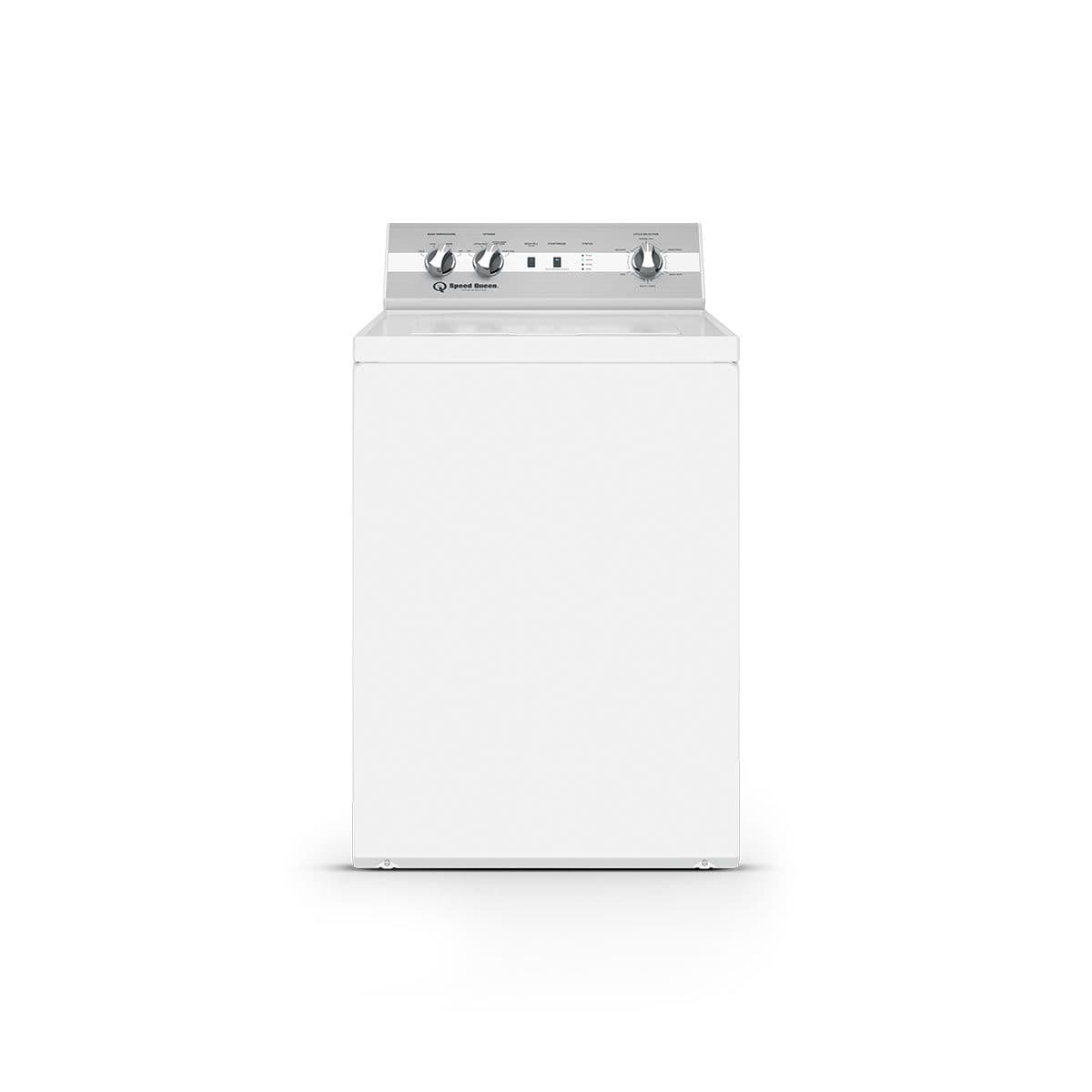
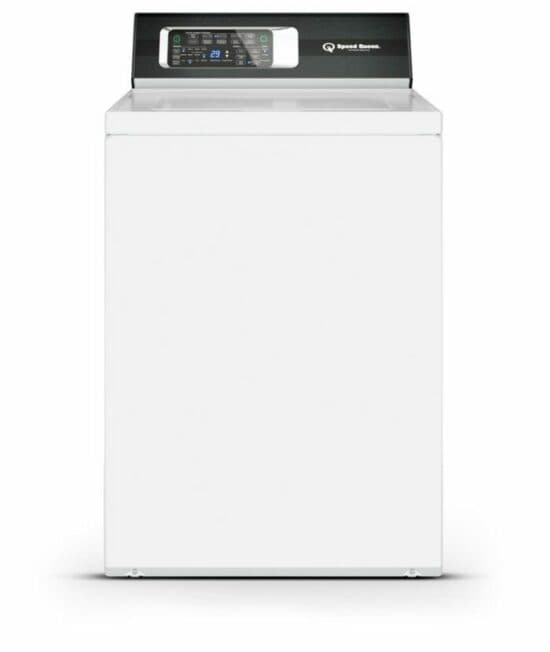
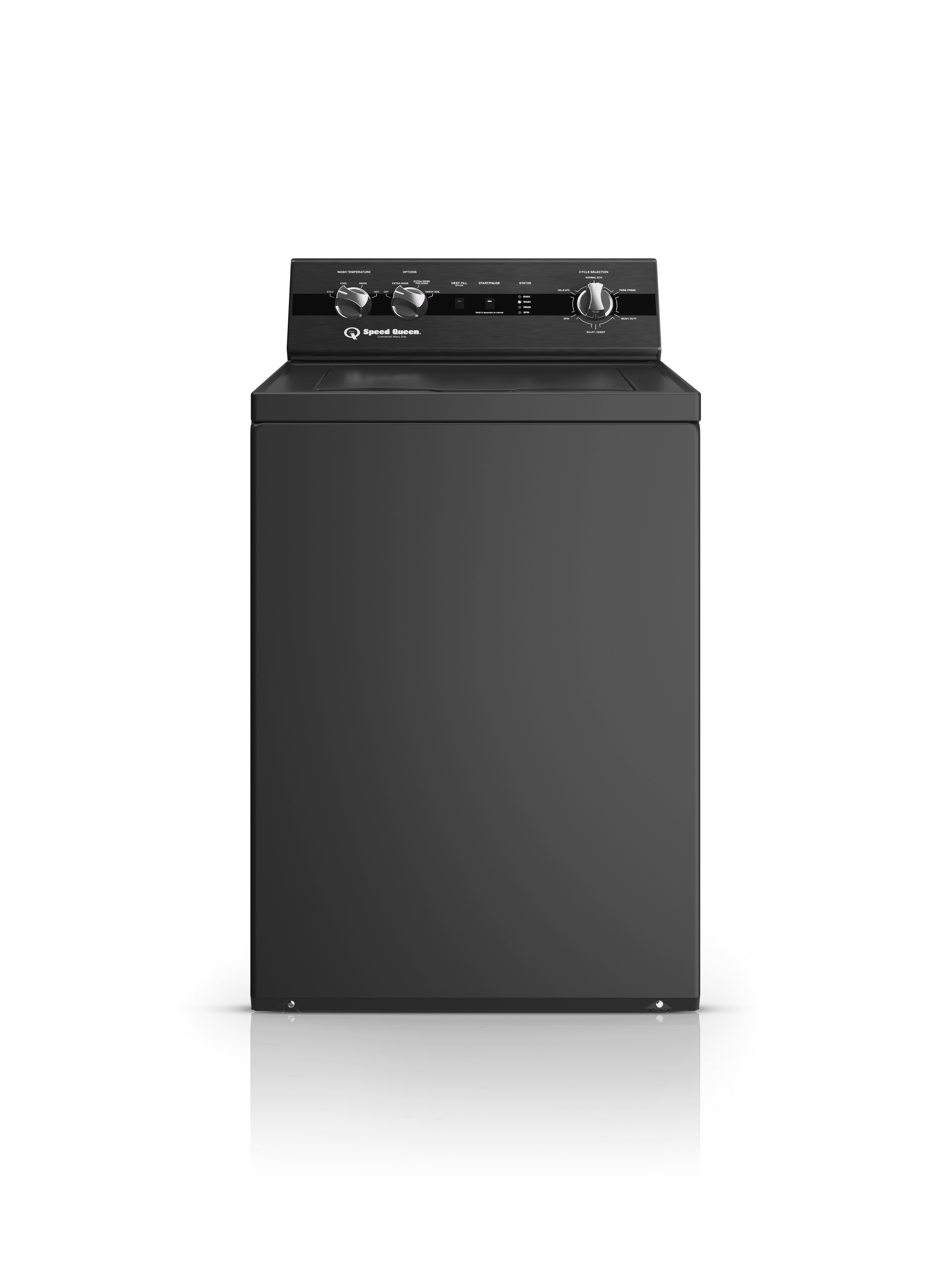
So read the tiers as a statement of expected reliability. The TR7 top load and the matching DR7 dryer carry 7 years of parts and in-home labor — the longest coverage Speed Queen writes. The TR5, the TC5 Classic Clean, and the DR5/DC5 dryers carry 5 years, as does the FF7/DF7/SF7 front load family. The TR3 and DR3 carry 3 years. Our Speed Queen warranty guide lays out every tier.
Notice what those years cover: they run straight through the window in which the quote you are holding right now typically arrives. That is the entire argument, expressed in a document the manufacturer has to honor.
If you are done doing this every few years
The replacement cycle is not the cost of having clean clothes. It is the product of design targets, and design targets differ by manufacturer.
Browse the full Speed Queen washer lineup — the TR7 for the longest warranty and the full feature set, the TR5 for the sweet spot, the TC5 Classic Clean for traditional simplicity. We are an authorized Speed Queen dealer, so every machine arrives with its factory warranty fully intact, and financing is available if you would rather spread a 25-year machine across manageable payments.
Or call us at (732) 631-8800 and read us the quote you were given. We will tell you honestly whether your machine is worth fixing — sometimes it is — and if it isn't, which Speed Queen fits how your household actually does laundry.