"Commercial-grade" might be the most abused phrase in the appliance business. It gets stamped on faucets, blenders, ranges, and yes, washing machines — often meaning nothing more than "looks sturdy" or "has a stainless finish." So when Speed Queen calls its home washers commercial-grade, a skeptical shopper should ask the fair question: says who? This post answers it properly, because in Speed Queen's case the phrase has an unusually literal meaning.
The Test: Does the Company Actually Build Commercial Machines?
Here is the simplest way to cut through commercial-grade marketing: ask whether the manufacturer sells machines into genuinely commercial laundry environments — laundromats, hotels, hospitals, fire stations — where the equipment must run many cycles a day, every day, for years, operated by hundreds of strangers, and where downtime costs the owner money by the hour.
Most consumer appliance brands do not. Speed Queen's parent company, Alliance Laundry Systems of Ripon, Wisconsin, is the largest commercial laundry equipment manufacturer in the world. Coin laundries across America and institutional laundries across the globe run on its machines. That commercial business is not a sideline or a licensing deal — it is the company. The residential washers are the descendants, not the ancestors.
What Commercial DNA Looks Like Inside a Home Washer
Shared engineering platforms. Speed Queen's residential machines are developed by the same engineering organization, in the same town, on the same testing philosophy as the commercial line. Suspension designs, bearing systems, and structural approaches flow downhill from machines built to survive laundromats.
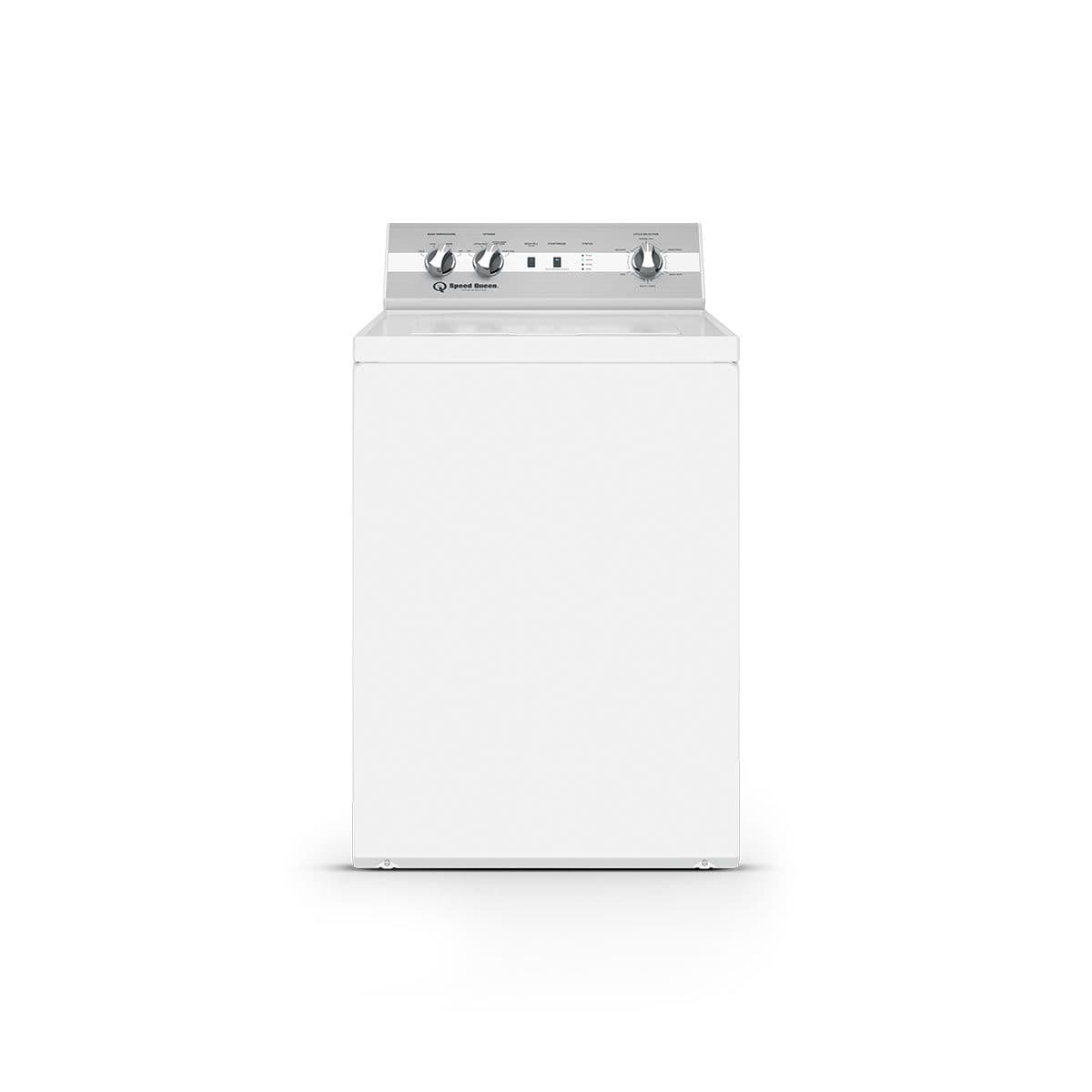
Commercial materials. Stainless steel wash tubs. Heavy-gauge steel cabinets. Metal components in load paths where consumer machines long ago switched to plastic — including the metal transmission still driving the agitator in the TC5 Classic Clean. Commercial owners will not accept parts that wear out, so the parts bin itself is commercial-hardened.
Commercial test standards. Speed Queen's residential washers are validated to roughly 10,400 cycles — about 25 years of home laundry. That number is only conceivable at a company whose commercial customers have demanded that kind of durability for over a century. The full engineering story is in why Speed Queen washers last 25 years.
Serviceability. Commercial equipment is designed to be repaired, not replaced — parts availability and sensible service access are business requirements. That philosophy carries straight into the residential line, which is one reason repair technicians consistently speak well of these machines: they are machines a technician can actually work on, in the rare event they need to.
The Duty-Cycle Math That Explains Everything
Here is why commercial heritage translates so directly into home durability. A busy laundromat machine can run eight or more cycles a day, seven days a week — over 2,900 cycles a year. A typical family runs about eight loads a week, roughly 400 cycles a year. Equipment engineered to survive years of laundromat duty is, by simple arithmetic, engineered to survive decades of household duty. When Speed Queen validates its residential machines to roughly 10,400 cycles, it is applying a commercial habit of mind to a home product: define the duty, test past it, and let the warranty department sleep well.
Consumer-only brands run this math in reverse. If the design target is a ten-year home life, that is about 4,000 cycles — so a part that survives 5,000 is, by their economics, over-built and over-priced. Nothing nefarious about it; it is just a different assignment. But it is why "commercial-grade" from a company with no commercial business is a costume, while from Speed Queen it is a birth certificate.
How to Spot Fake Commercial-Grade
A quick field guide for your next showroom visit. Be suspicious when "commercial-grade" or "commercial technology" appears on a machine from a brand with no commercial laundry business — ask the salesperson which laundromats run this manufacturer's equipment and enjoy the pause. Be suspicious when the claim rests on appearance: a stainless door ring or industrial styling is cosmetics, not engineering. And check the warranty: a company that truly builds to commercial standards will back it. One year of coverage on a "commercial-grade" machine is a confession.
By that last test, Speed Queen indicts nobody but itself: full 3, 5, and 7-year warranties covering parts and in-home labor, straight from the official warranty tiers.
What This Feels Like to Own
Commercial engineering has a texture you notice in daily use, not just in longevity statistics. The lid and door hardware close with a solidity that surprises first-time owners. The controls are physical, legible, and instant — designed for a laundromat customer who has never seen the machine before, which happens to make them perfect for every houseguest and teenager who will ever do a load in your home. The machine does not wander across the floor during spin, because mass and suspension were budgeted for, not shaved off. It is the appliance equivalent of closing the door on a well-built truck: nothing flashy, everything reassuring.
Yes, There Is Also a Literal Commercial Line for Homes
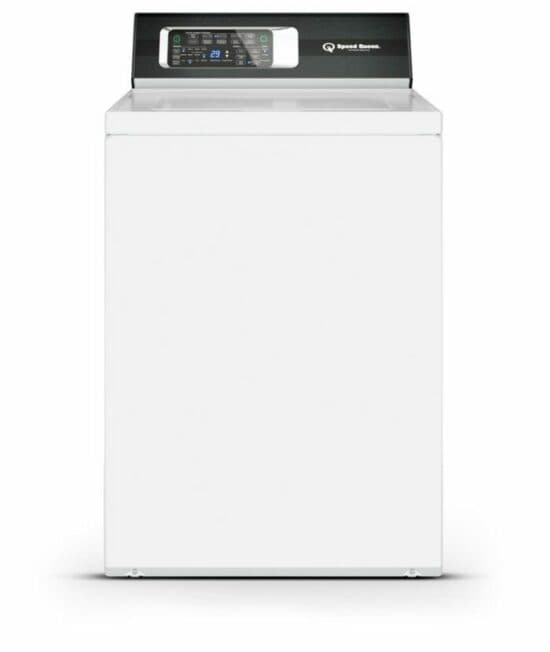
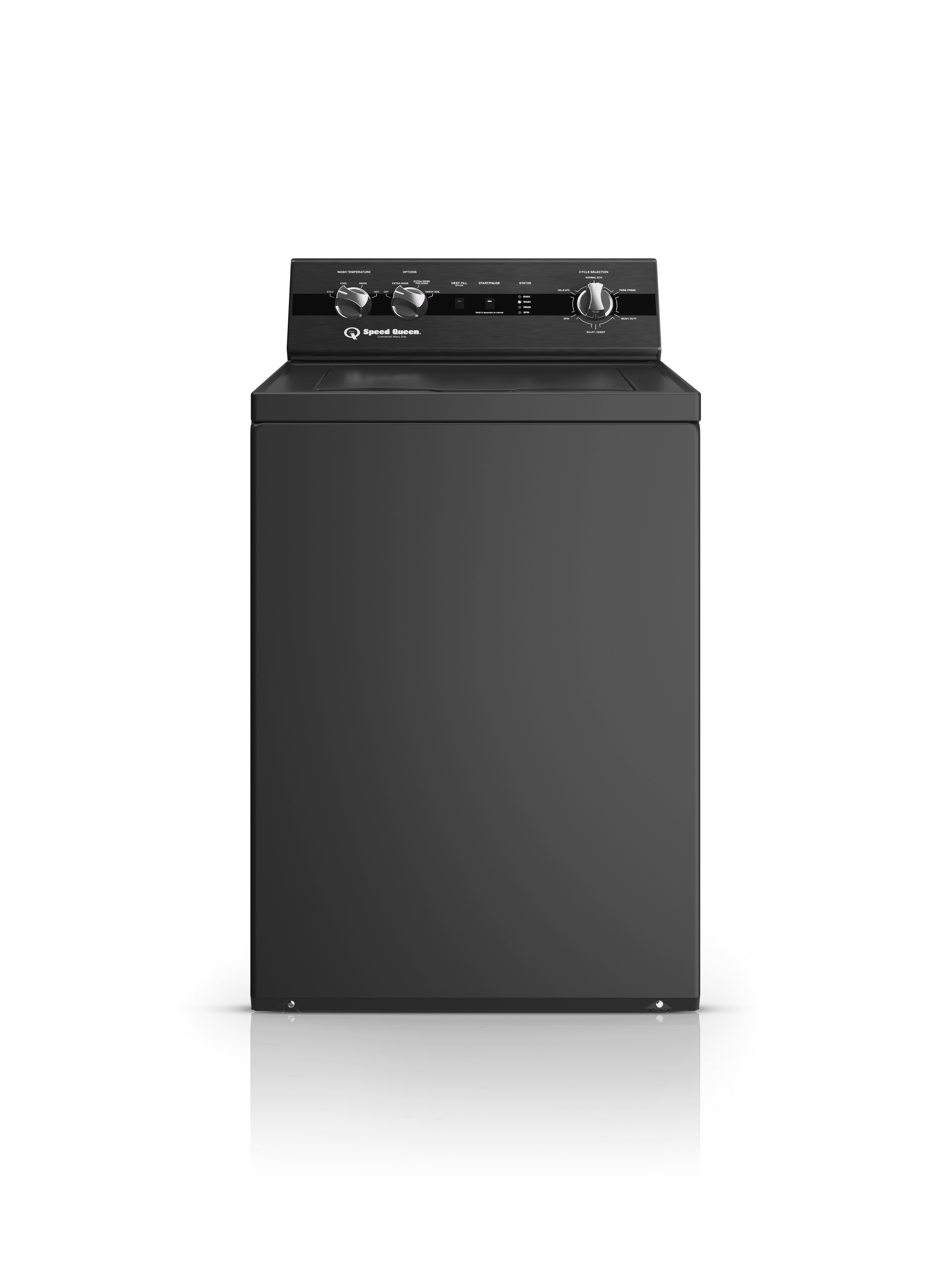
For buyers who want to go one step further — multi-family buildings, rental properties, working farms, or households that simply want laundromat equipment at home — Speed Queen also builds true light-commercial machines for on-premise use. Browse our coin-op & commercial collection to see them alongside the residential flagship models like the TR7 washer and DR7 dryer.
Why This Distinction Should Drive Your Purchase
The gap between marketing commercial-grade and engineering commercial-grade is the gap between a washer that survives 8 years and one tested for 25. It is the difference between a warranty that ends before the trouble starts and one that outlasts it. When you buy the real thing, you are not paying for an adjective — you are buying into a supply chain, test lab, and parts philosophy built for owners who fire equipment that fails.
See the Real Thing
Every machine we sell — washers, dryers, and stacked pairs — carries genuine commercial DNA from Ripon, Wisconsin. Read the full story at why Speed Queen, spread the cost with flexible financing, or call (732) 631-8800 and ask us anything — including which laundromats run these machines. We can name names.