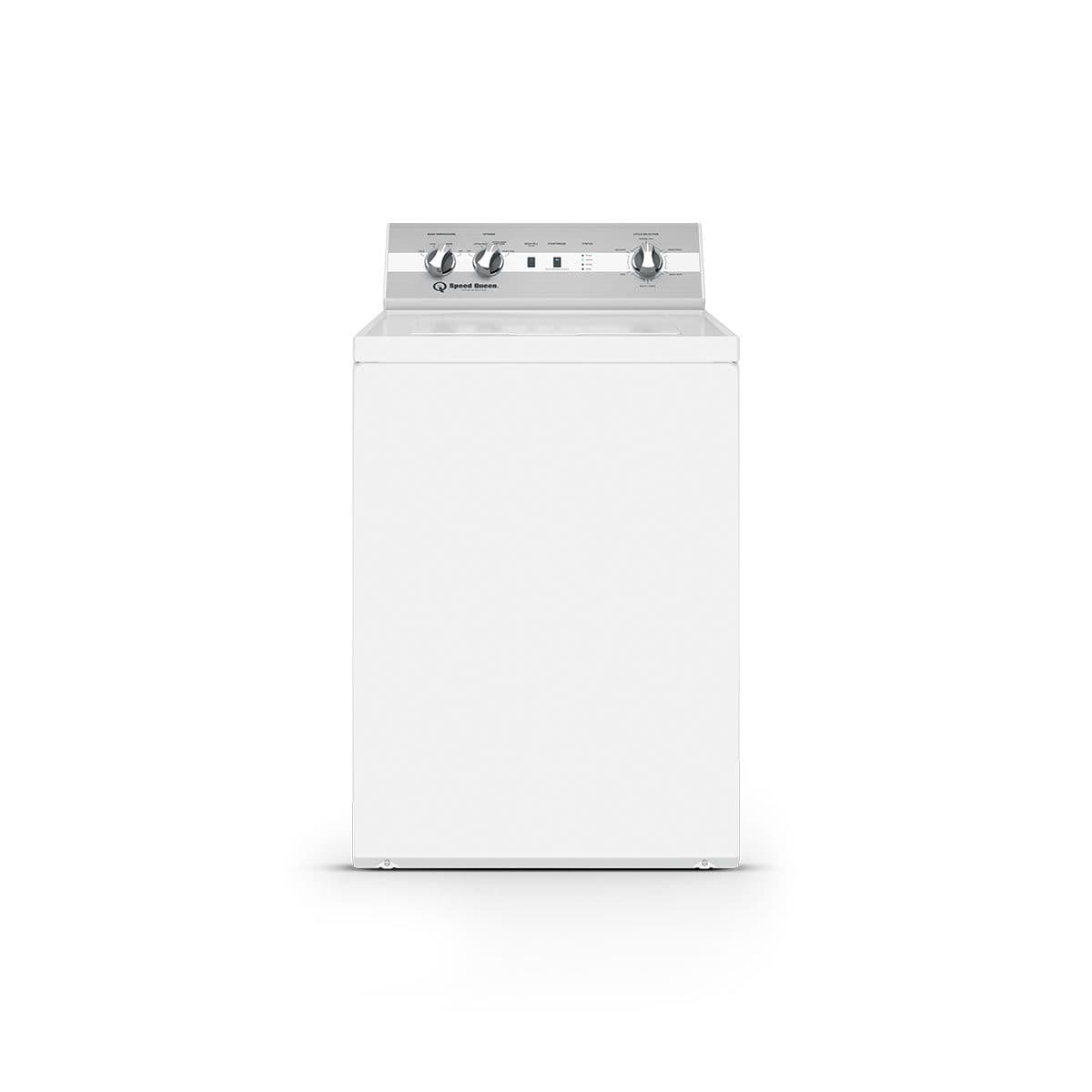
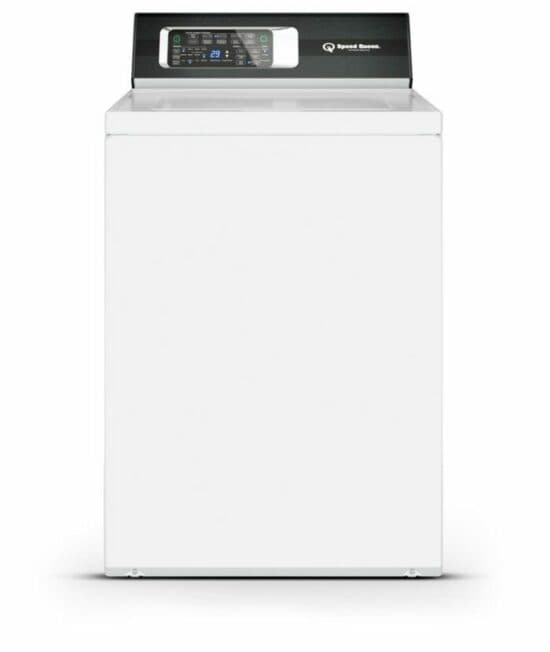
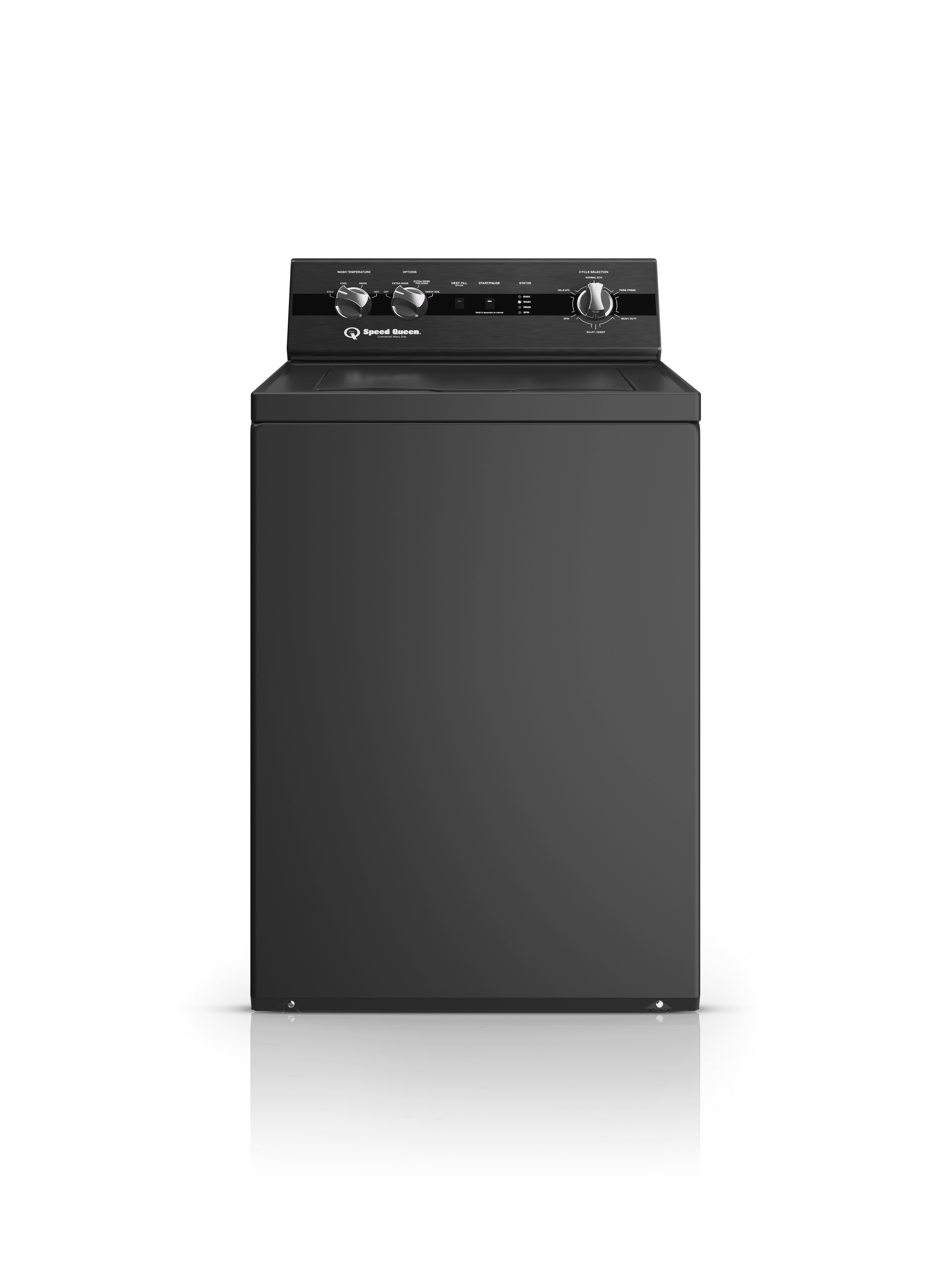
Every Speed Queen is built to the same standard — designed, engineered, and tested in Ripon, Wisconsin to survive roughly 25 years of household laundry. So the top-load-versus-front-load question is not about which one is built better. It is about which format fits your space, your body, your utility bills, and your laundry habits. Here is the honest comparison, Speed Queen edition.
The Contenders
In the top load corner: the TR7, TR5, and TR3 with Speed Queen's modern engineered wash system, and the TC5 Classic Clean with its deep-fill metal-transmission agitator (the TR-versus-TC choice gets its own full breakdown here). In the front load corner: the FF7 front load washer and its matching DF7 dryer. And bridging both worlds: the SF7 stacked washer-dryer, a front-load pair in a single vertical unit.
Water and Energy: Front Load Wins
Physics gives this round to the front load. Tumbling clothes through a partially filled horizontal drum simply uses less water than immersing them vertically, and less hot water means less energy. The FF7 also spins at high speed, extracting more water before the dryer takes over — which shortens drying time, the most energy-hungry part of laundry day. If your household runs high laundry volume and you watch utilities, the front load's savings compound week after week for decades. The TR series narrows the gap considerably compared to old-style deep-fill machines; the TC5 deliberately doesn't try.
Speed and Simplicity: Top Load Wins
Top load cycles are shorter — a normal TC5 wash finishes in well under an hour, and the TR series stays brisk, while front load cycles run longer by design. Top loads also let you toss in the stray sock after the cycle starts, need no bending to load, and have no door gasket to maintain. Front load owners should leave the door ajar between loads and wipe the gasket occasionally — a small habit, but a real one, covered in our maintenance guide. If your laundry style is "start it now, done by the time the oven timer rings," the top load fits your rhythm.
Fabric Care: Front Load by a Nose, TR Close Behind
Tumbling is inherently gentle — there is no agitator contact at all, which is why premium garment care skews front load. Speed Queen's TR wash action was engineered specifically to reduce fabric wear versus traditional agitation and acquits itself impressively. The TC5's vigorous classic action is the most aggressive of the three — which is precisely what its fans want for work clothes and serious soil.
Ergonomics and Everyday Living
This one is personal, literally. Top loads are loaded from a natural standing position — no bending, no crouching — which matters more every year to knees and backs, and makes them the default recommendation for anyone with mobility concerns (unless a front load is raised on a platform to counter height). Front loads ask you to bend, but repay you with a flat top that becomes genuine workspace: a folding surface, a detergent shelf, or the footprint for a matching dryer stacked above. Households with small children should note that front load doors sit at curious-toddler height, while a top load lid is out of reach; households with large dogs report the opposite calculus about laundry-eating. And listen to your laundry room's location: front loads at high spin transmit less splash noise but more floor vibration on bouncy wood-framed floors, while top loads are more forgiving of imperfect floors. None of this appears on a spec sheet, and all of it shapes two decades of daily use.
Space: The Stacked SF7 Changes the Game
The FF7 washer and DF7 dryer can be installed side by side or, with the DF7 wall-mounted or on a rack above, in configurations a top load can never match. But the cleanest space solution is the SF7 stack: a full Speed Queen front-load washer and dryer in one roughly 27-inch-wide footprint. For condos, closets, apartments, and vacation homes, it is the difference between having commercial-grade laundry and not having it. Browse the full stacked collection, and note that gas and electric dryer variants are available across the line.
Installation Notes Worth Knowing Before Delivery
Measure doorways and the final alcove — Speed Queens are heavier than typical machines (that is the steel you are paying for), so plan the path once. Confirm your dryer hookup: electric models need a 240V outlet, gas models a gas line — the model suffix tells you which you are looking at. Front loads reward a solid, level floor for their high-speed spin. And every format deserves proper leveling on day one; our delivery teams handle all of this routinely.
Capacity: Read the Cubic Feet, Not the Silhouette
Shoppers often assume top loads hold more because they look bigger. In practice, front load drums use their volume efficiently because clothes tumble through the full space rather than needing room to circulate around an agitator — so comforters, sleeping bags, and king-size bedding are classic front load territory. Speed Queen's machines across both formats are honest full-size washers, and the right question is not which silhouette looks larger but what your biggest regular load actually is. If bulky items are a monthly event, the FF7 or SF7 will handle them gracefully; if your laundry is high-frequency but ordinary-sized, any format in the lineup has you covered.
The Quick Answer Key
Big family, high volume, utility-conscious: FF7 front load. Traditionalist, heavy soil, speed lover: TC5 Classic Clean. Best all-rounder with the longest warranty: TR7 top load. Small space, zero compromise: SF7 stacked. All four carry Speed Queen's full parts-and-labor warranties — 7 years on the TR7, and 5 years each on the FF7, the SF7, and the TC5 — per the tiers in our warranty guide. (The front load family is a flat 5-year term; the "number in the model name" shorthand only holds on the top load line.)
Pick Your Format, Keep the Durability
Whichever way you go, the machine is built for decades. Compare every model across washers, dryers, and stacked pairs, read why Speed Queen for the engineering deep-dive, and use flexible financing to make the up-front cost a monthly detail. Still torn between formats? Call (732) 631-8800 and describe your laundry room — we will tell you exactly what fits.