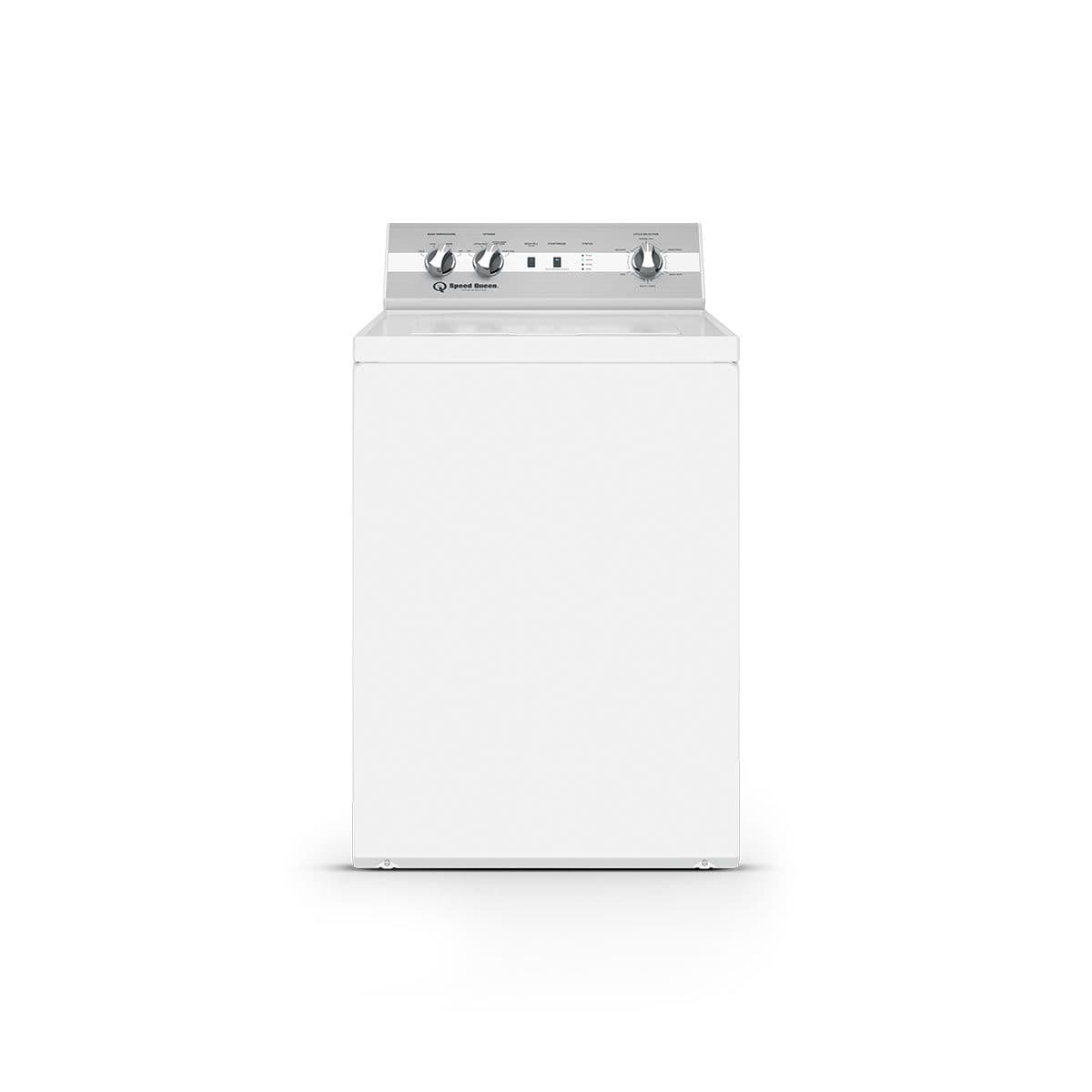
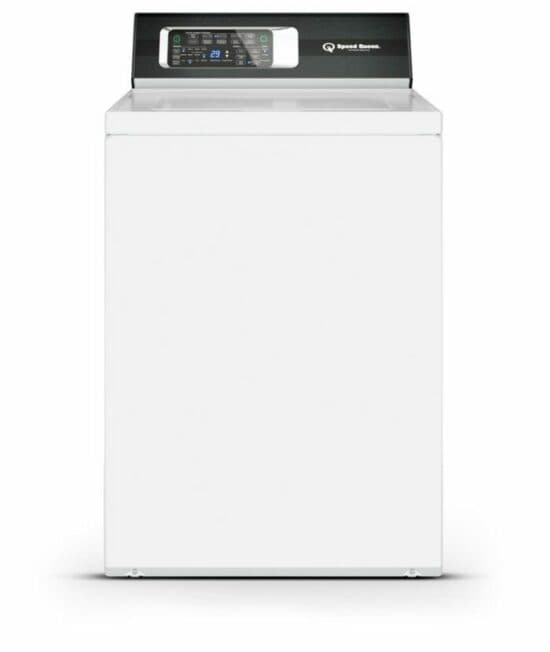
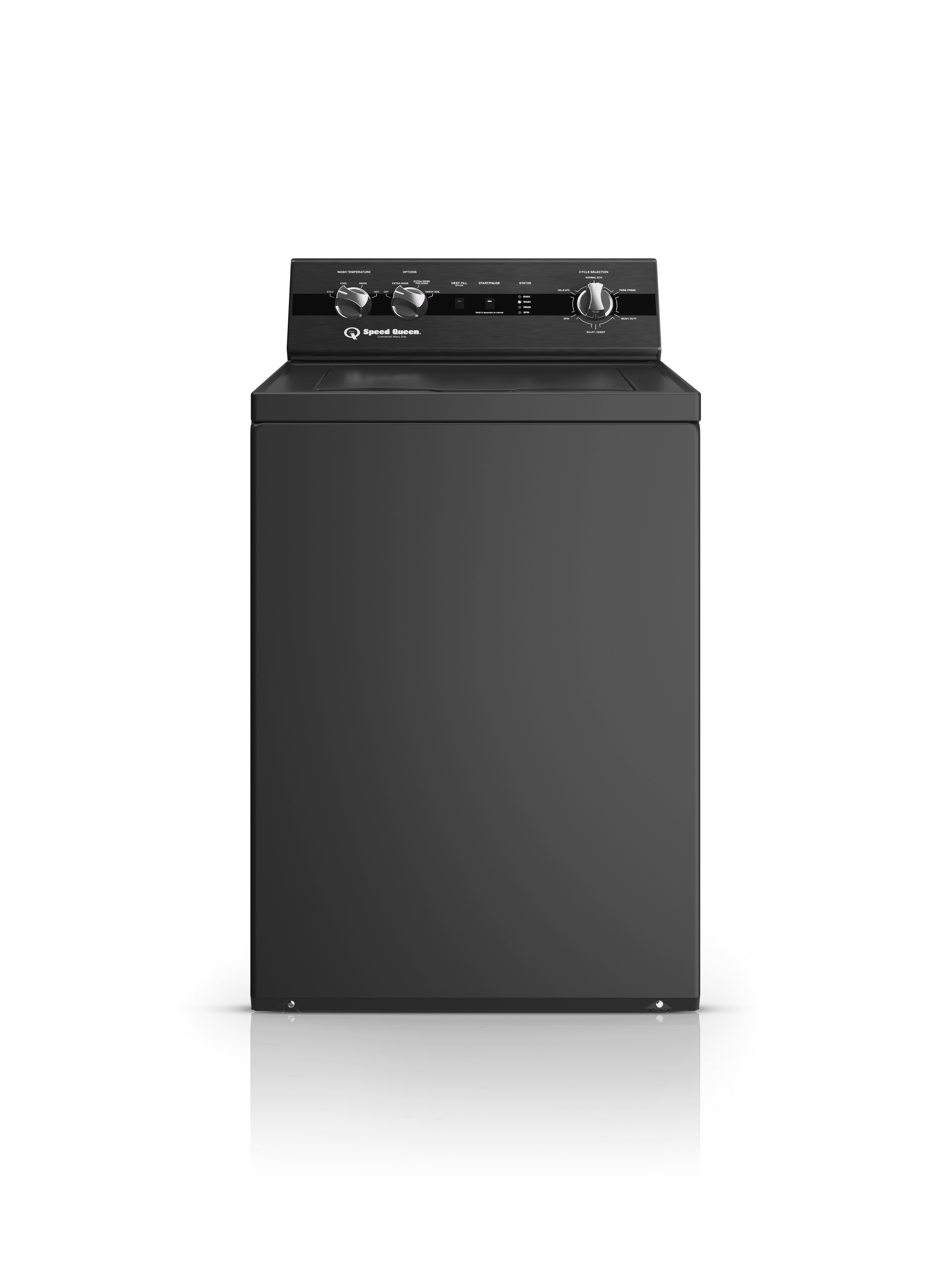
Most appliance comparisons are an exercise in finding differences that matter. This one is the opposite. Once you have decided on a Speed Queen TR top load washer, the honest news is that the three machines in front of you are nearly the same machine.
That is not a knock on any of them. It is the single most useful thing you can know before you spend the money, because it changes what you should be comparing.
What is identical across all three
Read the official Alliance spec sheet across the TR7, TR5 and TR3 columns and the shared rows go on and on.
All three are 3.2 cu. ft. — the same capacity, the same load. All three use Speed Queen Perfect Wash™, the brand's engineered wash system. All three are driven by the same Variable Speed 1 HP motor. All three carry the Quiet Agitation rating of 43 dB. All three are rated "No Lid Lock – Before First Spin," meaning you can open the lid and add the sock you found through the entire wash portion, up until the machine begins its first spin.
Underneath, the bones are the same too: a stainless steel wash tub, a porcelain outer tub, an automatic balancing system, a traditional agitator, a durable three-coat finish, and an end-of-cycle signal. Even the cabinet is dimensionally identical — 25 5/8" wide, 42 3/4" high, 28" deep, and 53" with the lid open. If a TR3 fits your laundry room, so does a TR7, down to the eighth of an inch.
So when you step up a tier, you are not getting a bigger tub, a stronger motor, a better wash, or a quieter machine. You are getting two things: more control over how the machine runs, and more years of Speed Queen paying for repairs.
What actually changes: the controls
The control panel is where the tiers genuinely separate, and the gap is real.
The TR7 gives you 16 preset cycles, 4 temperature selections, 4 load sizes and 4 soil levels. It is the only machine of the three with a Time Remaining Display, Favorite Cycles, a Speed Cycle, and Delay Start. Those four features exist on no other TR.
The TR5 steps down to 6 preset cycles, 4 temperatures, 3 load sizes and 2 soil levels. You keep the full temperature range — which is the selection most people actually reach for — and give up the granular soil settings and the display.
The TR3 runs 4 preset cycles, 3 temperatures, 3 load sizes and 2 soil levels. It is the deliberately plain one: pick a cycle, pick a temperature, start the washer.
Be honest with yourself about this part. A large share of households run two cycles for the life of a washer — normal and heavy — and never touch the rest. If that is you, sixteen presets is sixteen presets you paid for and will not use. But if you actually sort delicates, run a bedding cycle weekly, want the machine to tell you it has nine minutes left, or want to program a load to start after you leave for work, the TR7's panel is not decoration. It is the reason to buy it.
The real variable: warranty years
Here is the part we think most buyers underweight.
The TR7 carries 7 years parts and labor. The TR5 carries 5 years. The TR3 carries 3 years. Parts and labor in each case — the component and the technician who installs it, not the token first-year coverage most of the industry writes. Across the TR line the number in the model name is the number of years, which is the most honest product naming in the appliance business (the front load FF7/DF7/SF7 family is the exception — it carries a 5-year term). We break the whole structure down in our Speed Queen warranty guide.
Now put that next to the fact you already know: these machines are engineered and tested to roughly 10,400 cycles, about 25 years of typical household laundry. The warranty is not an estimate of how long the machine lasts. It is a block of years during which a failure costs you nothing.
Framed that way, the step from a TR3 to a TR7 is really the purchase of four additional covered years on a machine you expect to still be running in year twenty. Take whatever the price gap is on the day you shop — the TR7, TR5 and TR3 product pages carry live pricing — and divide it by those four years. That number is what the extra coverage costs you annually, and it is usually well under the cost of a single out-of-warranty service call. One repair inside the extended window and the upgrade has paid for itself; zero repairs and you bought peace of mind, plus the control panel.
The same math runs the other direction, and we will say it plainly: if you are buying for a rental unit, a second home, a light-use household, or a budget that is genuinely tight, the TR3 is not a compromised machine. It is the same washer with fewer buttons and a shorter insurance policy, and it will outlast most of what the big-box floor sells at any price.
How we actually steer people
Buy the TR7 if this is your primary family washer and you intend to keep it for decades. You get the longest warranty Speed Queen writes on a top load, every cycle and setting the platform offers, the time display, delay start, and your choice of white (TR7006WN) or matte black (TR7006BN) — the only TR offered in a second finish. For a heavy-laundry household, this is the one that stops being a purchase and starts being infrastructure.
Buy the TR5 if you want the sweet spot. It keeps all four temperature selections, adds five years of parts-and-labor coverage, and drops the features most people genuinely never use. This is the tier we recommend most often, and it is the same warranty length as the TC5 Classic Clean.
Buy the TR3 if simplicity is the goal or the budget is the constraint. Same tub, same motor, same Perfect Wash, same 43 dB agitation, three years covered. Nothing about the machine is cheaper — only the panel and the paperwork.
One thing no TR does
If you got here because you want a lid that opens whenever you want it to, read this carefully: every TR unlocks the lid only until the first spin. That is better than most of the market, but it is not full-cycle access.
The one Speed Queen residential washer rated "No Lid Lock – Full Cycle" is the TC5 Classic Clean, and it is not the top of the line — it is a different control philosophy with a Two-Speed 1/2 HP motor and the Classic Clean wash system instead of Perfect Wash. We gave it its own post: the TC5 and the lid that still opens. If you are choosing between the two families rather than between TR tiers, start with TR vs TC: which top load should you buy.
Pick a tier, not a machine
That is the whole decision. The washer is already decided — it is the same steel, the same tub, the same motor, built the same way in Ripon, Wisconsin. What is left is how many buttons you want and how many years you want covered.
Browse the full Speed Queen washer lineup for current pricing on all three tiers, check financing options if stretching to a longer warranty is a matter of monthly cash flow rather than total cost, or call us at (732) 631-8800. Tell us how many loads a week your house runs and how long you plan to stay in it, and we will tell you which tier is the right buy — including when that answer is the TR3.